It’s almost February, and some feed stores *coughwilcocough* have already started bringing in chicks. We’ve had a variety of birds over the years, and while we’re far from experts, the last decade has allowed us to make many mistakes and learn handy lessons to share.
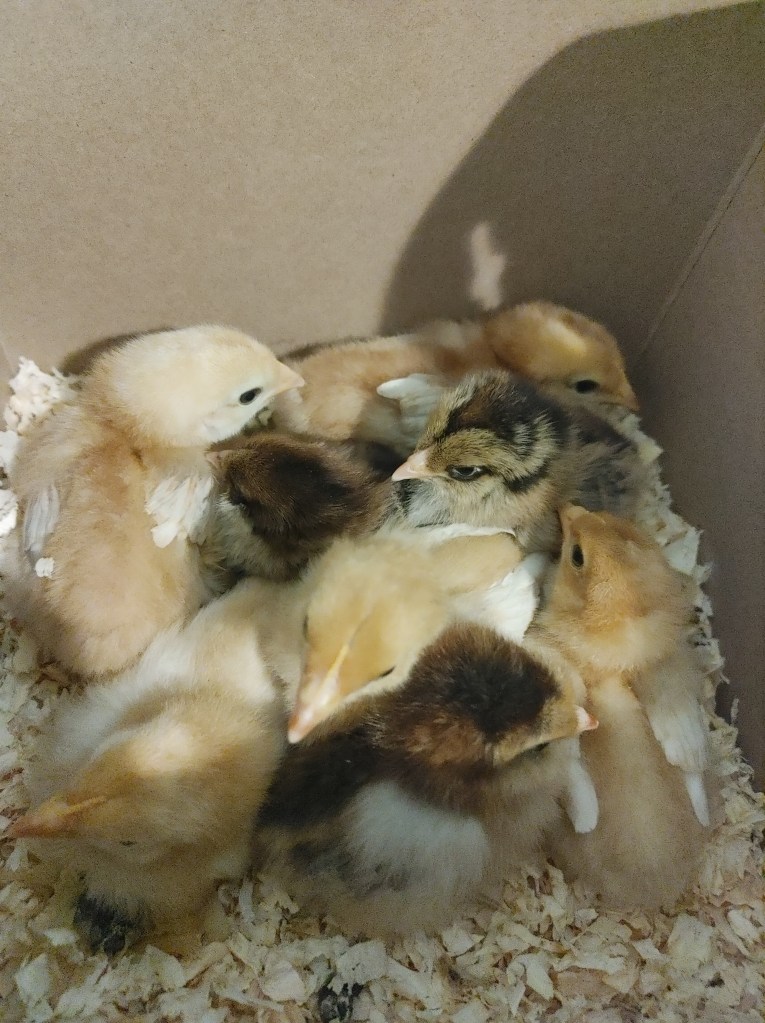
Considering breed and numbers: If you are new to keeping chicks and chickens, my first word of advice is to look at your yard, budget and location and see if you’re able to support at least 3 birds. Yes, even if you’re on your own, chicks and then later as full grown birds, birds do not prefer to be singletons. For chicks this can be a life or death decision, as they have evolved to rely on the warmth of their peers as well as their mother to stay alive until they are feathered out. A few options… 1. Go in on your chick project with a friend or two, so that all of your babies can be raised the first month or so together and you’ll all have the best outcome. 2. Get the chicken math out of the way and just go ahead and get 3 to 5 right up front! You can do it! 😉 3. purchase older pullets from someone. These cost a bit more, but save on possible heartache from failure to thrive or accidents. I also recommend buying chicks in person for your first few times, as they’ve already been through transport, so that risk is now over for you as their final destination, they’ll also have their vaccines.
Breeds I recommend for the person just starting out with chickens: Orpingtons and Rhode Island Reds (or a derivative of those called ISA Browns) are some I’ve found to have the best temperaments and they tend to be hardy birds. I also recommend Brahmas. Our experience with these breeds has been that they are docile, and decent layers.
Breeds I would shy away from based on your location and local climate are heavily plumed breeds like silky or Brahmas, cochins, and polish. Their more heavy feathers can hold in the humidity and when cold or heat is added on top of that, it can cause frostbite or overheating.
The one breed I’ll never own again are leghorns. In our experience they are far more fickle, skittish and refuse to lay in the coop, instead opting to escape and lay where we could not reach their eggs. They’re also less thrilled with our cooler temperatures here in the Puget area of Washington State.
Deciding what time of year to bring in chicks will depend entirely on where you’re located, when your last frost is, and how involved you’ll want your set up to be. Chicks should NOT be outdoors on their own until they are fully feathered. However, you’ll likely be ready to get them out of your house earlier than that. Setting up a brooder space in a garage, or shed will help bridge that gap. The three critical pieces to their surviving outdoors are air, water and heat. They need to be in a draft free space. Their access to water and therefore humidity needs to be well controlled. Suspending their water container rather than having it on the shavings helps both keep them from getting wet, and from spilling the water and getting the bedding wet, which would increase the humidity. And their heat, while stores use heat lamps, I highly recommend heat plates. One at each end of their enclosure with a nice, deep bedding. And don’t forget to make sure they cannot fly or jump out the top of their enclosure.
If you’re still in the depths of winter, and will be for another couple of months and are not wanting to set up a longer term brooder, I would look at purchasing chicks more into March or April. If your winter chill will be ending within the next month, go ahead and swoop those little ones into your basket!
 Diverted Agrarian
Leave a comment